
World AIDS Day 2025 | Kenya | One Race One Goal | Ending AIDS by 2030
The first time HIV and AIDS was discovered in Kenya, I wasn't even born yet. It was 1984. While my parents were living their lives, building their future, somewhere in Nairobi, doctors were confirming Kenya's first case of what they called "the killer sex disease." Nobody understood what was coming. Nobody imagined how many lives would be lost or that their unborn children would grow up in the shadow of this epidemic.
I grew up watching people die. Not strangers on the news, People I knew. People I loved. They slowly wasted away while whispers of shame followed them to their graves. Friends' parents who disappeared, leaving orphans behind. Neighbors who became too sick to work, too weak to fight. The coffins never stopped coming.
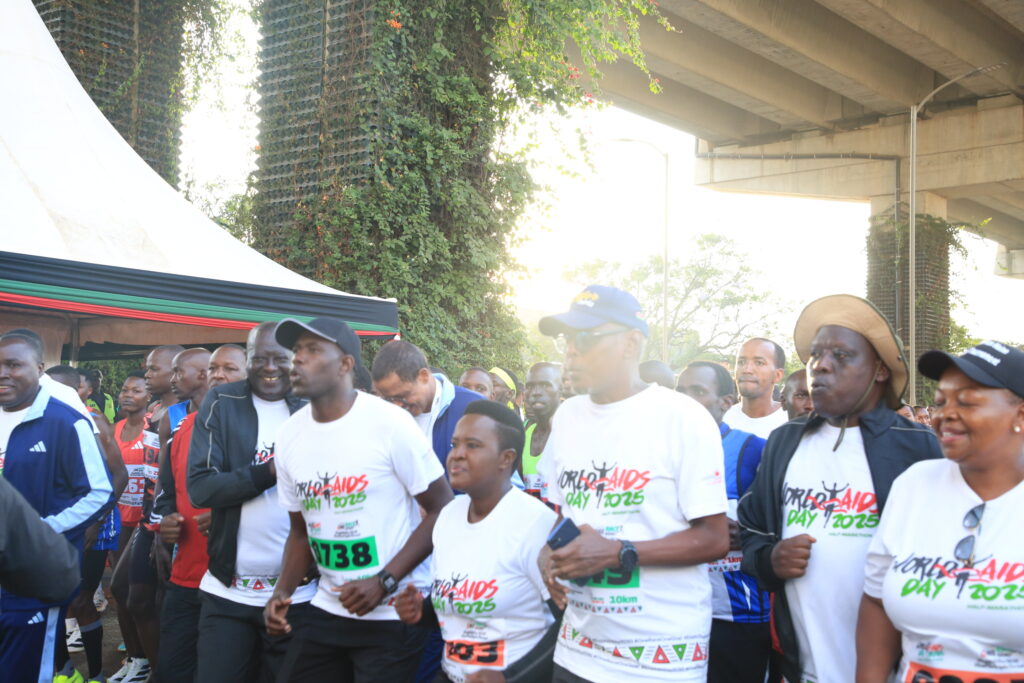
But on Sunday, November 30, 2025, I stood at Nyayo Stadium at 5:00 AM for a different reason. Not to mourn. To run. To fight back. To be part of World AIDS Day 2025 and the transformative One Race, One Goal movement to end AIDS among adolescents and young people in Kenya.
World AIDS Day 2025: Why I Had to Run
Let me tell you what broke my heart enough to wake up before dawn on a Sunday morning for World AIDS Day 2025. I know villages, real places where real people live that will be swept clean in the next ten years to 20 years if we don't change our behavior. Entire communities disappearing. Not from war. Not from famine. From a preventable disease that we already know how to stop.
And the most painful part? The children. I've seen babies born with HIV because their mothers didn't get treatment during pregnancy. I've watched toddlers taking antiretroviral drugs every day because we the adults, the parents, the community failed them. Most of these children get infected at birth or during breastfeeding, and it's largely because of negligence from us parents.
That's what keeps me up at night. That's what got me to Nyayo Stadium for World AIDS Day 2025.
Kenya's Leadership Stands United: World AIDS Day 2025 at Nyayo Stadium
When Prime Cabinet Secretary Musalia Mudavadi, representing President William Ruto, stood before us at Nyayo Stadium for World AIDS Day 2025, I felt every word resonate through the crowd. In his powerful reflection on this historic day, Mudavadi reiterated a sobering truth that many forget: HIV does not discriminate between the poor and the rich, It affects us all. He cited the heartbreaking example of Philly Bongoley Lutaaya, Uganda's most famous artist, who succumbed to the AIDS virus on December 15th, 1989. Lutaaya's courage in publicly disclosing his HIV status before his death became a turning point in East Africa's fight against AIDS stigma, proving that this epidemic spares no one not the wealthy, not the famous, not the powerful.
Dr. Patrick Amoth, Director-General for Health at the Ministry of Health and Vice President of the WHO Executive Board, spoke powerfully about the triple threat facing our youth; HIV infections, teenage pregnancies, and gender-based violence. I thought about my own children.
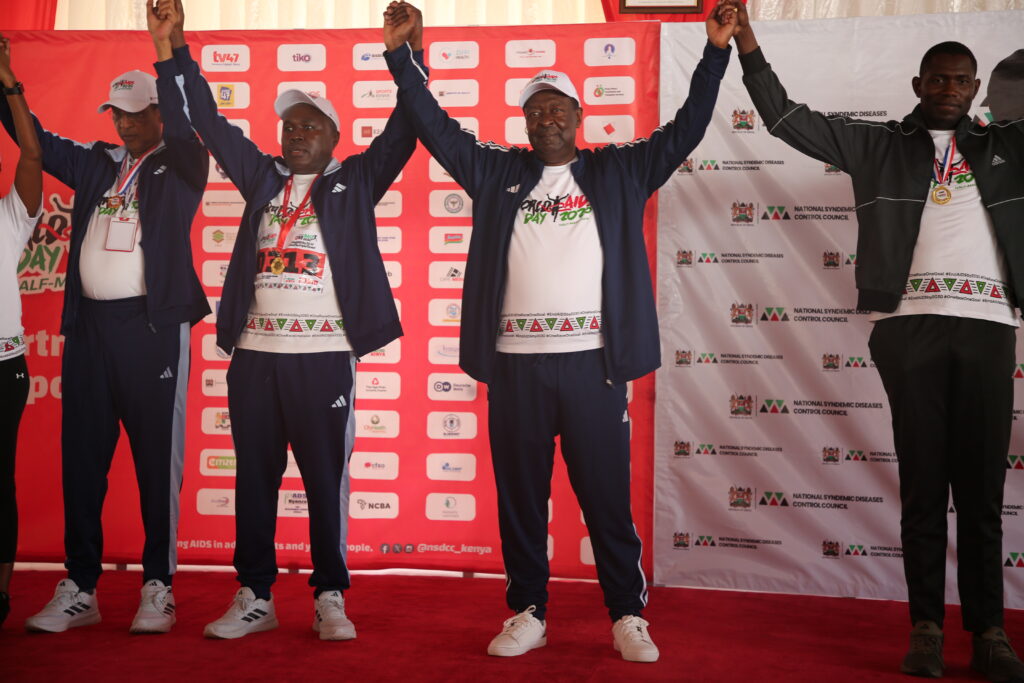
Medical Services Principal Secretary Dr. Ouma Oluga spoke passionately about mobilizing the nation for World AIDS Day 2025 and I could feel the zeal by which he hit the ground running and the excitement after receiving the medal. Senators joined us leaders from across Kenya showing solidarity.
Representatives from the United Nations and development partners pledged their continued support to Kenya in achieving our mission to end AIDS by 2030, aligning with the global World AIDS Day 2025 theme: "Overcoming disruption, transforming the AIDS response."
The leaders who make policies were all there. But we, the parents, the community members, the everyday Kenyans, we're the ones who have to make those policies work in our homes, our neighborhoods, our villages.
One Race, One Goal: More Than Just a Marathon
The National Syndemic Diseases Control Council (NSDCC) organized World AIDS Day 2025 brilliantly. I want to thank NSDCC for creating an event that wasn't just about running, it was about bringing everyone together. Children. Youth. Parents. Grandparents. Persons living with disabilities. People living with HIV. Everyone mattered. Everyone belonged.
As I looked around Nyayo Stadium that World AIDS Day 2025 morning, I saw:
- Wheelchair racers warming up with determination in their eyes
- Families with children as young as five, excited for the family fun run
- Corporate teams in matching t-shirts supporting the One Race One Goal mission
- Elite athletes stretching for the 21-kilometer half marathon
- Elderly couples walking slowly but steadily toward registration
- Young people, so many young people ready to take on the 21km, 10km, 5km and 2km races
We were all different. But we had one goal: End AIDS by 2030.
The World AIDS Day 2025 theme "One Race, One Goal" resonated with me deeply. Because that's exactly what this is. We're all in this race together regardless of age, ability, status, or background. And the goal is clear: no more children infected with HIV. No more mothers burying their babies. No more families torn apart by a disease we can prevent.
The Call That Echoed at World AIDS Day 2025: No Child Should Carry No Child
Throughout the World AIDS Day 2025 event at Nyayo Stadium, our leaders repeated one powerful message: No child should carry no child.
Think about that. Children having children. Girls aged 10-14 getting pregnant. Teenagers becoming mothers before they've finished school, before they understand their own bodies, before they're ready.
And with teenage pregnancy comes increased vulnerability to HIV. The triple threat; HIV, teenage pregnancy, and gender-based violence is interconnected. They feed into each other, creating a vicious cycle that traps our young people.
When you see a 13-year-old girl with a baby on her back, you're not just seeing early motherhood. You're seeing interrupted education. Limited economic opportunities. Higher risk of HIV infection. Possible gender-based violence. A stolen childhood.
The leaders at World AIDS Day 2025 from Prime Cabinet Secretary Musalia Mudavadi to the senators all emphasized this. But calling for change isn't enough. We parents, we communities, we need to act.
What I Learnt at the World AIDS Day 2025 Medical Camp
After the race, I passed by the medical camp set up by NSDCC during the World AIDS Day 2025 marathon. This wasn’t just a display they were offering real services. And the message was clear: if you’re an adult choosing to engage in sexual activity, take responsibility and protect yourself and your partner. Condomize. The King and Queen of Condoms led that championship loudly and proudly.
- Free HIV testing
- Counseling for young people
- Information about PrEP (pre-exposure prophylaxis)
- STI screening
- Family planning services
- Education on the triple threat
I watched teenagers, some looking nervous, others determined walking into the testing tent. I saw parents bringing their children for information. I observed people living with HIV sharing their stories, showing others that life doesn't end with a positive diagnosis.
Kenya has achieved an 87% treatment rate for people living with HIV. We've reached 90.1% prevention of mother-to-child transmission coverage. We've made AIDS-related deaths drop by 90% compared to the peak years.
But we can't celebrate too early. In 2024, Kenya recorded 19,991 new HIV infections a 19% increase from the previous year. And 54% of those were young people aged 15-24. This is happening in our backyards. To our neighbors. This is why World AIDS Day 2025 matters.
The Villages That Haunt Me: Why World AIDS Day 2025 Is Urgent
I mentioned villages that could be swept clean in the next 10 to 20 years. Let me be more specific.
I know a village in Western Kenya where nearly every household has lost at least one family member to AIDS. The orphans are being raised by grandmothers, elderly women who should be resting, but instead are caring for children whose parents died too young.
I know communities where young men and women are dying in their prime 30s, 40s leaving behind children who will grow up without parents, without guidance, without the love and support every child deserves.
I know places where stigma is so strong that people would rather die than get tested, rather suffer in silence than seek treatment, rather infect others unknowingly than face the shame of disclosur and it doesn't have to be this way.
This is why World AIDS Day 2025 and the One Race One Goal movement are critical. If we talk openly about HIV. If we encourage testing. If we ensure pregnant mothers get the treatment that prevents transmission to their babies. If we teach our young people about safe sex. If we address poverty and inequality that make people vulnerable.
We can do all this, those villages don't have to disappear. Those children don't have to become orphans. Those families don't have to be destroyed.
What We Must Do After World AIDS Day 2025
The NSDCC gave us a platform at Nyayo Stadium for World AIDS Day 2025. The government has committed resources. The policies are in place but policies don't raise children, we do. Policies don't have difficult conversations about sex, we do. Policies don't challenge stigma in our communities, we do. Here's what I'm committing to after World AIDS Day 2025, and I'm asking you to join me:
1. Get tested. Know your status. If you're sexually active, get tested regularly. If you're pregnant, get tested and get on treatment if positive. It can save your baby's life.
2. Talk to your children. I don't care how uncomfortable it is. Your child needs to hear about HIV, pregnancy, and safe sex from you not from their friends, not from the internet, not from painful experience.
3. Challenge stigma. When you hear someone gossiping about a person living with HIV, speak up. When you see discrimination, call it out. Stigma kills as surely as the virus does.
4. Support treatment adherence. If someone in your family is HIV-positive, help them take their medication consistently. Viral suppression means they can live a normal lifespan and cannot transmit the virus to others.
5. Address the root causes. Poverty, gender-based violence, lack of education these are what make people vulnerable. Support girls' education. Speak out against violence. Create economic opportunities.
A Message to Parents After World AIDS Day 2025: We Are the First Line of Defense
I'm writing this as a mother. As someone who has watched too many children suffer from adult negligence. When a baby is born with HIV in 2025 when we have the medical knowledge and tools to prevent 99% of mother-to-child transmission, that's not fate, that's failure.
We failed to ensure the mother got tested during pregnancy, connect her with treatment, support her through the process and in creating an environment where she felt safe disclosing her status.
Every child infected with HIV is a call to action. A reminder that we can do better. We must do better.The NSDCC understands this. That's why they designed World AIDS Day 2025 to be inclusive, we're all part of the solution.
Hope at the Finish Line: World AIDS Day 2025 and Beyond
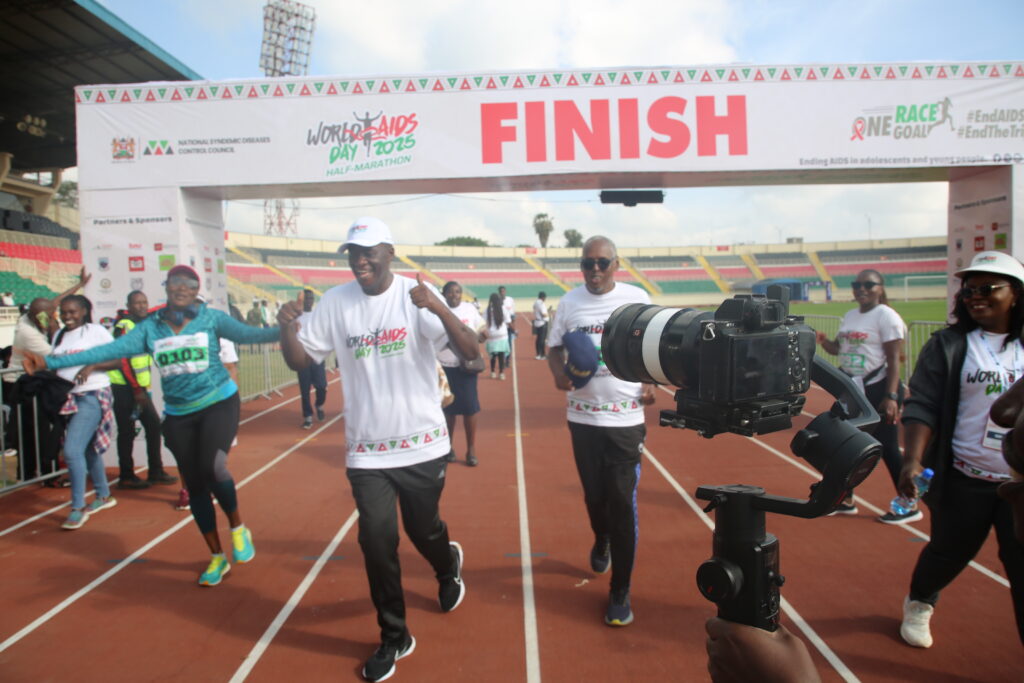
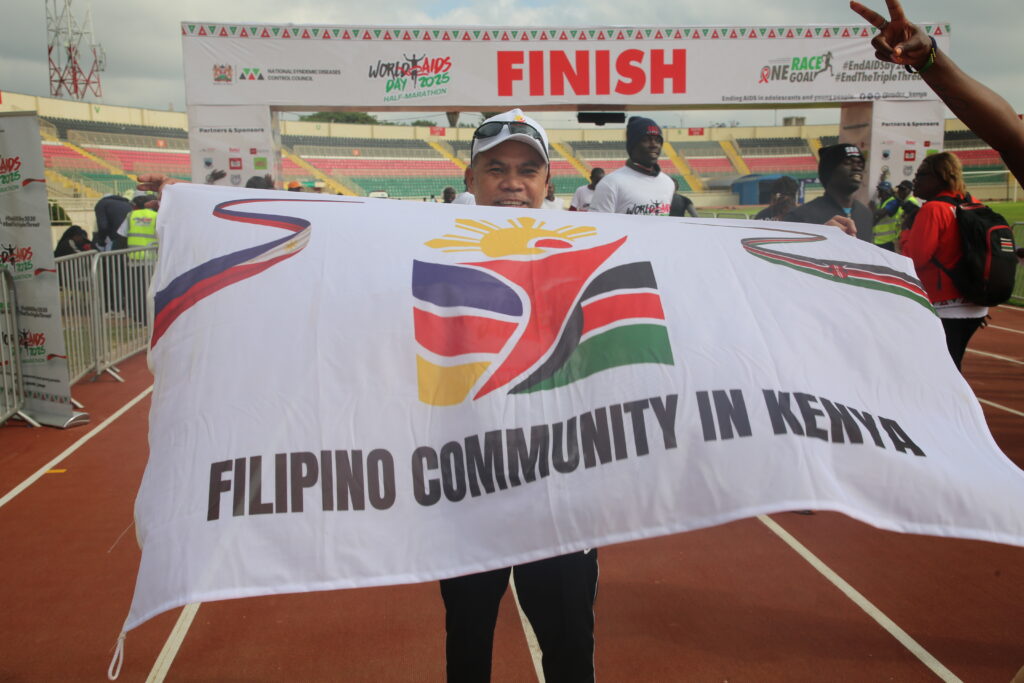
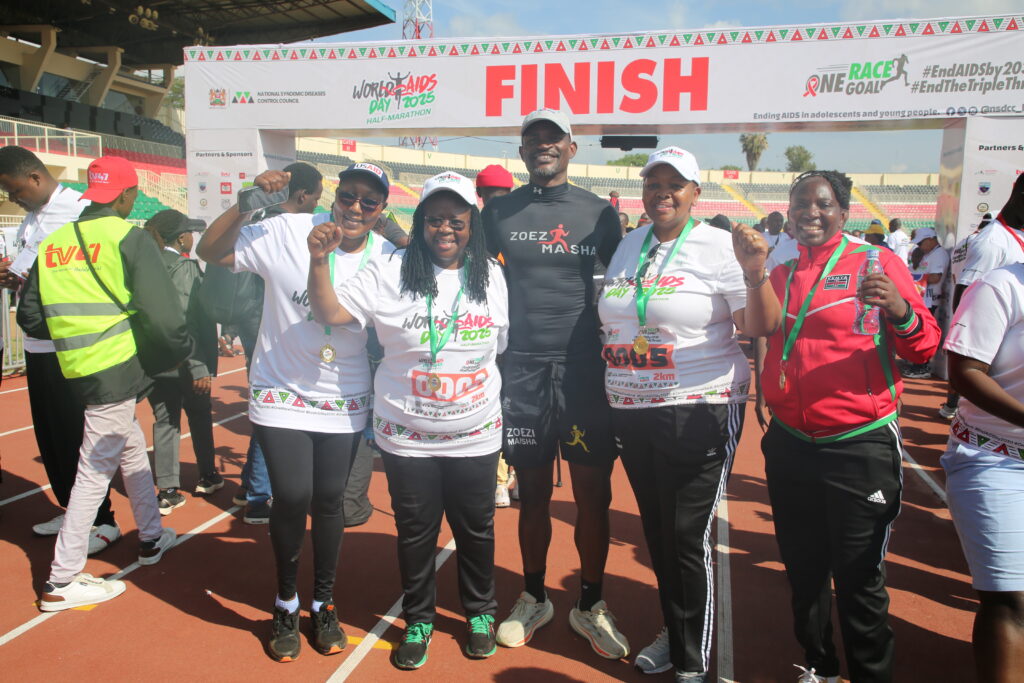
I saw through the my lens thousands cross the finish line at Nyayo Stadium that Sunday morning exhausted, sweating, but filled with purpose. Different ages. Different abilities. Different backgrounds. But all running toward the same goal.
And I thought: If we can come together like this for World AIDS Day 2025, we can come together to end AIDS. Kenya has what it needs: the medicine, the knowledge, the infrastructure, the commitment from leadership shown at World AIDS Day 2025. What we need now is for every one of us in our homes, our schools, our communities to take responsibility.
For every child we've lost. For every mother who's buried a baby. For every village that's been devastated. For every young person fighting to live. We run. We fight. We refuse to give up. One Race. One Goal. Let's finish this.
My Dual Role: Runner and Storyteller
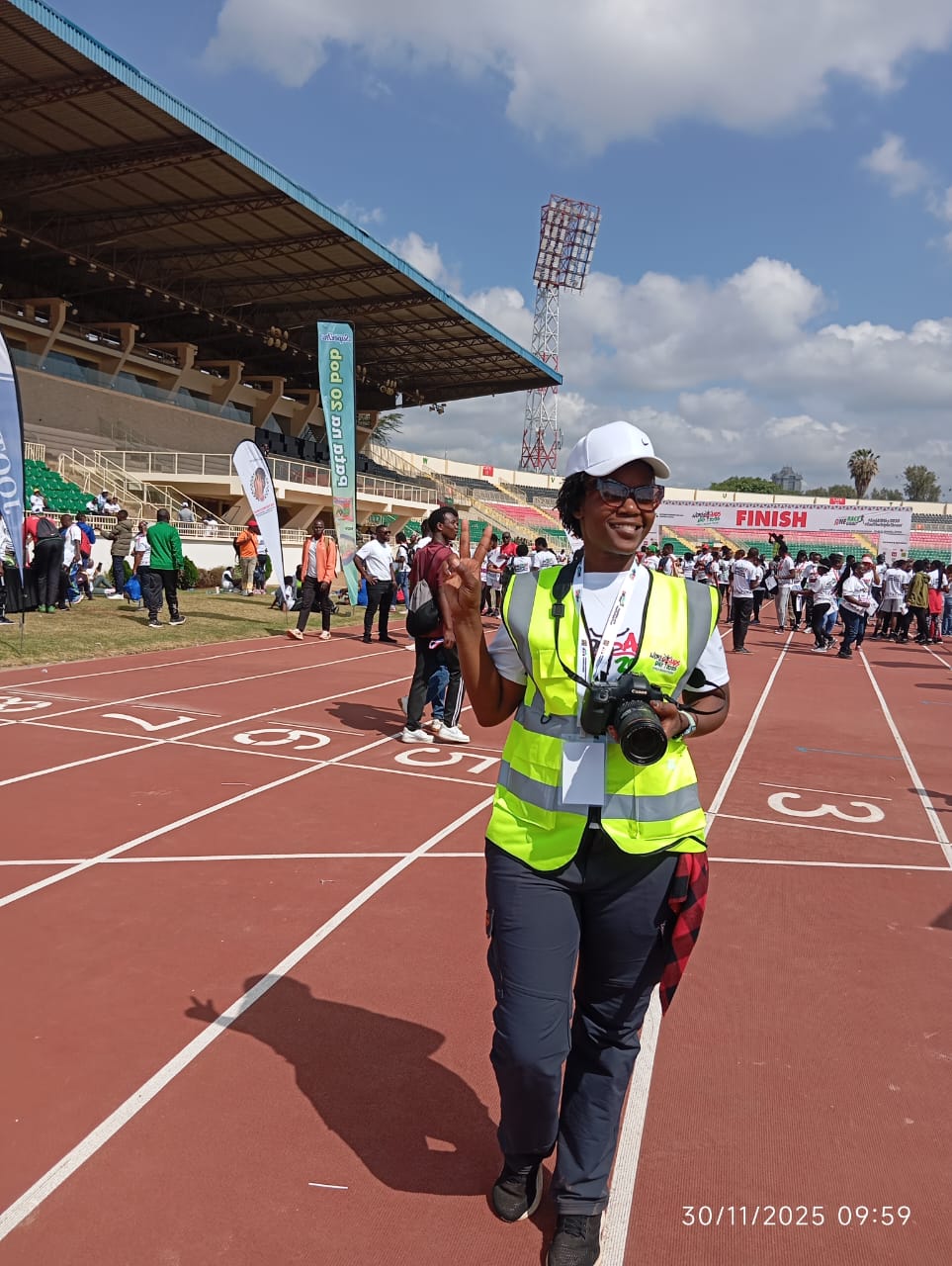
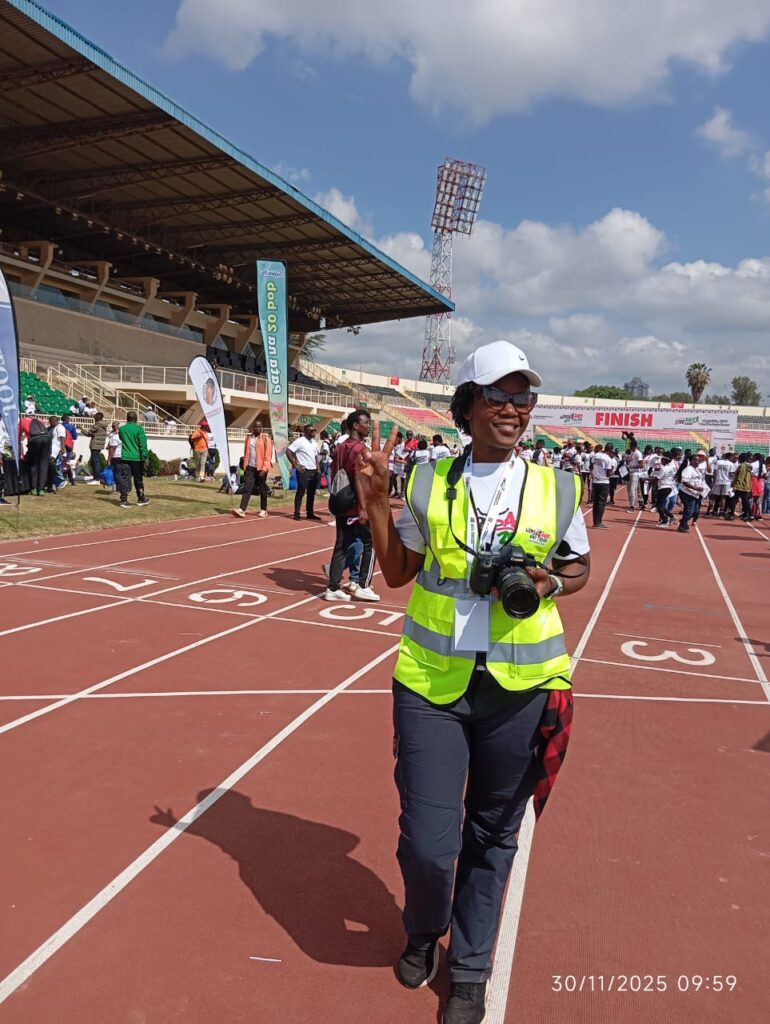
At World AIDS Day 2025, I didn't just participate as a runner. I also served as one of the key officials behind the lens, capturing the beautiful memories of thousands of Kenyans coming together in solidarity at Nyayo Stadium.
Through my camera, I documented:
- The determination on wheelchair racers' faces as they prepared for their race
- Children excitedly lining up for the family fun run
- Elderly couples holding hands at the starting line
- Young people getting tested at the medical camp some nervous, others relieved
- Prime Cabinet Secretary Musalia Mudavadi addressing the massive crowd
- The moment thousands of runners surged out of Nyayo Stadium onto Mombasa Road
- Tears of joy at the finish line
- Community members embracing people living with HIV
These photos tell the story that words alone cannot: We are one nation, united against a common enemy.
Being both a participant and a photographer gave me a unique perspective. I saw this movement from inside and outside. I felt the exhaustion of the 10km run and the exhilaration of capturing history as it unfolded.
Every photo I took was a commitment to remember this day, to honor the struggle, and to show future generations that in 2025, Kenya chose hope over despair, unity over division, and action over silence.
Join the World AIDS Day 2025 Movement
On December 1, 2025 World AIDS Day I'm not just remembering the past. I'm running toward a future where no child has to grow up the way I did watching people die from a preventable disease.
References and Authoritative External Resources
Official World AIDS Day 2025 Reports & Statements:
1. UNAIDS World AIDS Day 2025 Official Report: "Overcoming Disruption, Transforming the AIDS Response" https://www.unaids.org/en/2025-world-aids-day The official UNAIDS report detailing the global HIV response, funding crisis, and path forward to end AIDS by 2030.
2. UNAIDS 2025 World AIDS Day Report (Full PDF): https://www.unaids.org/sites/default/files/2025-11/2025-WAD-report_en.pdf Comprehensive data on HIV prevention disruptions, particularly affecting adolescent girls and young women globally.
3. UN News - Global HIV Response Facing Worst Setback in Decades: https://news.un.org/en/story/2025/11/1166449 UN official news report on funding cuts and their impact on HIV services worldwide, featuring statements from UNAIDS Executive Director Winnie Byanyima.
4. UNDP Statement on World AIDS Day 2025: https://www.undp.org/speeches/world-aids-day-1-december-2025 United Nations Development Programme's commitment to addressing development dimensions that shape the HIV epidemic.
5. UNAIDS - HIV and Adolescent Girls and Young Women (2024 Report): https://www.unaids.org/en/resources/documents/2024/2024-unaids-global-aids-update-adolescent-girls-young-women Critical data showing 210,000 adolescent girls and young women aged 15-24 acquired HIV in 2023—four times higher than the 2025 target.
6. UNAIDS Thematic Briefing - HIV Prevention Among Adolescent Girls: https://www.unaids.org/sites/default/files/media_asset/UNAIDS_HIV_prevention_among_adolescent_girls_and_young_women.pdf Evidence-based strategies for HIV prevention specifically targeting adolescent girls and young women.
7. UNAIDS - International Women's Day Statement 2025: https://www.unaids.org/en/resources/presscentre/pressreleaseandstatementarchive/2025/march/20250306-womensday Highlighting that 4,000 young women and girls become infected with HIV every week globally, with 3,100 in sub-Saharan Africa.
UN Women & Gender-Based Violence:
8. UN Women Statement - World AIDS Day 2025: "Recommit and Resource the Power of Women and Girls to Transform the AIDS Response" https://www.unwomen.org/en/news-stories/statement/2025/11/statement-recommit-and-resource-the-power-of-women-and-girls-to-transform-the-aids-response UN Women's call to protect programmes that empower women and girls, noting that 53% of people living with HIV are women and girls.
9. National Syndemic Diseases Control Council (NSDCC) - World AIDS Day 2025 Kenya: https://wad.nsdcc.go.ke Official Kenya World AIDS Day 2025 website with information on the One Race, One Goal marathon, triple threat strategy, and national HIV response.
10. Kenya Ministry of Health: https://www.health.go.ke Access to HIV testing locations, treatment information, and national health programs.
11. UNAIDS Press Release - Global Fund Pledges: https://www.unaids.org/en/resources/presscentre/pressreleaseandstatementarchive/2025/november/wad-2025-report Report on US$ 11.34 billion pledged to fight AIDS, tuberculosis and malaria, demonstrating global solidarity despite funding challenges.
12. World Council of Churches - World AIDS Day Prayers: https://www.oikoumene.org/news/wcc-shares-prayers-for-world-aids-day Faith-based community response to World AIDS Day 2025, highlighting the impact of funding cuts on HIV services.
Key Statistics Referenced (Sources Above):
- Global: 570 new HIV infections occur daily among young women aged 15-24 (UNAIDS 2025)
- Kenya: 19,991 new infections in 2024, 19% increase; 54% among youth aged 15-34 (NSDCC)
- Impact: 60% of women-led HIV organizations forced to suspend programs due to funding cuts (UNAIDS 2025)
- Treatment: 1.3 million Kenyans living with HIV are on treatment with 87% treatment rate (Kenya Ministry of Health)
- Prevention: 90.1% prevention of mother-to-child transmission coverage in Kenya (NSDCC)
- Progress: 72% decline in new infections, 90% drop in AIDS-related deaths in Kenya since peak years (NSDCC)
How to Use These Resources:
For Researchers & Health Workers:
- Access full UNAIDS reports for comprehensive data on global HIV trends
- Review UN Women statements for gender-specific interventions
- Consult NSDCC Kenya site for national statistics and programs
For Parents and Community Leaders:
- Use UNAIDS adolescent-focused reports to understand youth vulnerability
- Share UN Women resources on gender-based violence links to HIV
- Access NSDCC for local testing and treatment locations in Kenya
For Advocates & Policymakers:
- Reference UNDP statement for development-focused HIV responses
- Use UNAIDS funding data to advocate for sustained investment
- Share UN News coverage to highlight urgency of global response
© 2025 | World AIDS Day 2025 Kenya | All Rights Reserved
This article is dedicated to every child born with HIV who didn't have to be, every mother who lost a child to AIDS, and every community fighting to end this epidemic. We run together. We win together.